Do I Have to Buy Skyrim Again for Vr
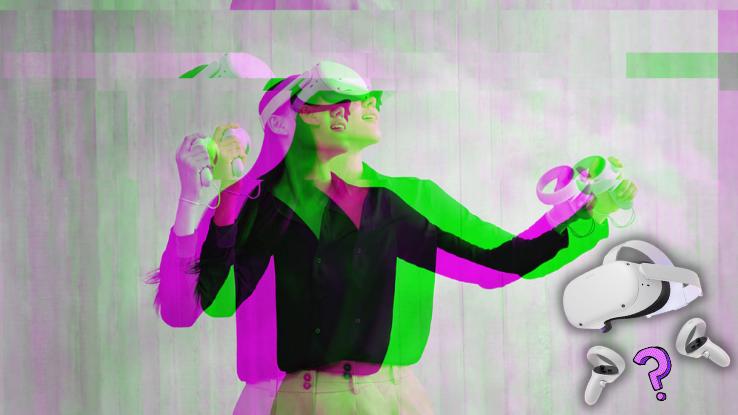
Virtual reality (VR), which simulates experiences that are either like to the real world of entirely invented, has get increasingly popular over the recent years. Instead of existence something fringe and almost sci-fi, the tech used has become more widely available, allowing developers to use VR platforms in video game development — and beyond.
As is the case with video games, VR platforms are at present being leveraged by the likes of everyone from healthcare professionals to real-manor agents because the simulation-creating tech allows them to create a better, more valuable patient, or customer, experience. While screens permit us to peer into worlds, VR tech actually immerses u.s.a. in three-dimensional worlds.
Yes, information technology all sounds pretty high-tech, but you tin easily scoop up a VR headset at your local Best Buy if y'all're so inclined. The only trouble? There are a lot of options out there — and a VR headset can exist quite the investment. So, if you're a beginner, is something like the ever-popular Oculus Quest ii your best bet for taking that first pace into VR experiences? Let's find out.
The Origins of VR Platforms
Humankind's interest in inbound invented worlds and virtual realities has existed for quite some time. In fact, explorations into virtual reality stretch farther dorsum so you might think — long before the efforts of mod-day video game companies, and even before we all became obsessed with The Matrix'southward simulation.
In the 1930s, science fiction writer Stanley G. Weinbaum was among the kickoff to predict the advent of VR. InPygmalion's Spectacles, a story from 1935, the visionary wrote about goggles that allowed the wearer to experience sensory, holographic worlds. The notion of VR would reoccur in other well-known sci-fi works, including Ray Bradbury's 1950 short story The Veldt, which tells the story of a family that lives an automatic (or "smart") abode. One of the home's wonders is the "nursery," a virtual reality room that creates reproductions of whatsoever place the family's children imagine.
Outside of fiction and sci-fi speculation, attempts at creating immersive, 3D worlds stretch back even further. For instance, panoramic paintings and murals of the 1800s sought to ship viewers into realistic scenes, albeit without other sensory or mechanically aided efforts. But a real spring forward came in 1838 with Charles Wheatstone's foray into stereoscopic photos.
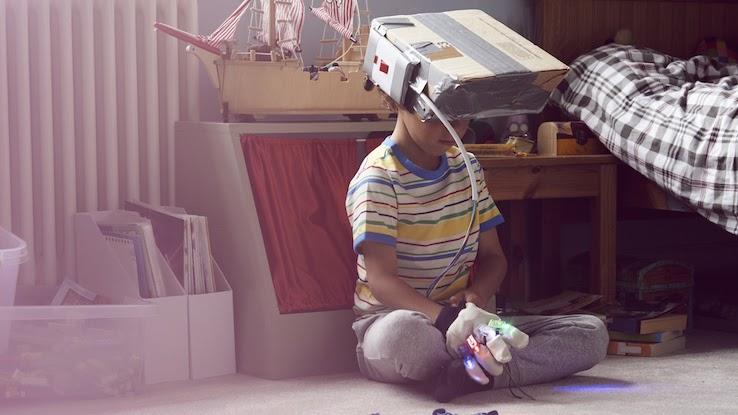
"Wheatstone'due south research demonstrated that the brain processes the different two-dimensional images from each center into a single object of three dimensions," the Virtual Reality Society explains. "Viewing 2 next stereoscopic images or photos through a stereoscope gave the user a sense of depth and immersion." This, of course, led to the development of the View-Primary, which was patented in 1939 and gave rise to a kind of unique virtual tourism feel. The Virtual Reality Guild besides points out that Edward Link'southward "Link Trainer," a 1929 electromechanical flying simulator, too has ties to early VR evolution, namely because information technology was meant to immerse would-exist pilots into the experience of flying.
Another huge leap forward came in the 1950s when cinematographer Morton Heilig created Sensorama, which, equally the name implies, was meant to stimulate all of the senses, beyond simply sight and sound. By 1960, Heilig had too invented the so-called Telesphere Mask, the showtime head-mounted brandish (HMD) always created. Over the adjacent 30 years, companies, inventors and visionaries alike tried to create VR tech and experiences, leading to the evolution of more than HMDs and flight sims. Notably, there were likewise more unique developments, including MIT's Movie Map in 1977 — a organisation that let users explore a virtual Aspen, Colorado, not like Google'southward Street View — and the Sayre Gloves in 1982, which, according to the Virtual Reality Society were gloves "wired to a computer system and used optical sensors to detect finger movement."
Of grade, in these early days, VR tech wasn't all that accessible. Sure, the Sayre Gloves may audio a lot like PlayStation Motion'due south motility wands or, you know, HAPTX gloves, simply even in the '70s and '80s VR and side by side tech were used past the likes of NASA, non gamers. In 1993, that all changed — or, at the very to the lowest degree, video game visitor Sega hoped that would change. The company behind Sonic the Hedgehog released its own VR headset for the popular Sega Genesis video game console, but, in the wake of several development challenges and a steep price-bespeak, the endeavor flopped. The Sega VR-1 and Nintendo'due south Virtual Male child, which came out over the adjacent few years, didn't come across much success either.
While the video game industry would pivot slightly to motion control — think Nintendo's Wii — and other more mild VR experiences, folks in tech were still researching VR every bit a viable industry. In 2007, Google added the Street View ability to their Maps service, allowing users to (almost) stand anywhere in the world and view 360-degree images. Google seemed poised to be the leader in VR tech, but the visitor's launch of both Google Glass and Google Cardboard came in the wake of a successful 2012 Kickstarter campaign. The campaign in question was an effort to fund Palmer Lucky's prototype headset, the Rift, and it raised nearly $2.5 million. Despite Sega and Nintendo's earlier failures, information technology became clear that VR had true commercial potential again — and then much and then that Facebook bought Lucky'due south Oculus engineering in 2014. And that brings usa back to the Oculus Quest 2.
In 2010, Palmer Lucky created a kit VR headset, "Oculus Rift," which would go on to irrevocably change the VR landscape. As mentioned above, Lucky would keep to rise over $2 1000000 to fund his development process, and, in a relatively short corporeality of fourth dimension, his tech became the gilded standard. In 2014, established tech giants entered the fray, realizing the commercial value of accessible, mainstream VR platforms. Facebook, of course, purchased the Oculus tech from Lucky, but Google launched Cardboard, and Sony appear that a VR component would exist developed for the PlayStation 4 (PS4).
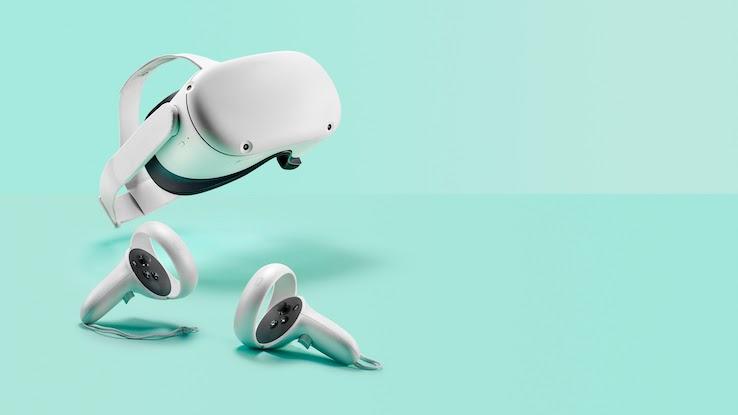
With the likes of Oculus and the HTC Vive leading the mode, the VR boom began. Oculus launched its one-half-dome HMD in 2018, which allowed users to experience a very broad field of view (140 degrees, to exist exact), and, that same year, introduced users to both Oculus Go and Oculus Quest. These HMDs fix the benchmark for standalone VR. In particular, Oculus Go offered an affordable option for users. Much like gaming PCs, headsets were pricing more casual (or curious) would-be users out.
Most recently, the Oculus Quest 2 was released in October of 2020. The most advanced all-in-one VR organisation out there, Oculus Quest 2 provides an immersive experience for users and shows the capabilities of next-gen gaming, including total-trunk and paw tracking abilities. Simply is the Oculus Quest 2 the right choice for yous?
Which VR Platform Is Best for New Users?
Despite the COVID-nineteen pandemic, 2020 saw the global VR market valued at over $fifteen billion. Moreover, information technology'due south expected to grow at a rate of 18% until 2028. Right now, five major players dominate the market — Oculus, Sony, Samsung, Google and Lenovo Group. Each of these companies has created platforms and tech that are both immersive and entertaining.
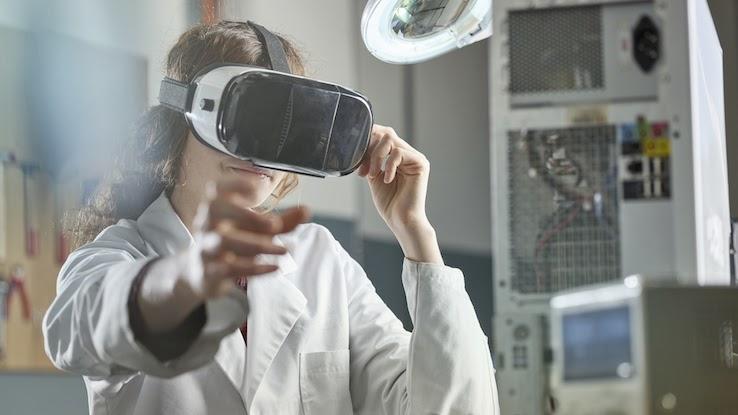
So, which is all-time? That's kind of hard to say outright. But when it comes to folks who are merely getting into VR, a few options do stand out:
- The Oculus Quest 2 has been said to be one of the best VR platforms on the market. With improved optics, smoother software, and more precise controls, the Quest 2 is a real stride higher up its predecessor. And, unlike other VR platforms, more welcoming and mainstream. While GamesRadar+ points that the actual headset feels a flake cheap, the site'due south review also notes that "If you've been waiting to go into VR, but have been put off past the requirements of a super-powerful gaming PC, then let us tell you why the Oculus Quest 2 is the VR headset you demand in your life correct now."
- The HP Reverb G2 has been known to offering the highest resolution quality for PC gamers. That power puts it a notch above the Oculus Quest two, merely it's also articulate that the HMDs are intended for different audiences. Our advice? If y'all're already a PC gamer, yous might prefer the HP Reverb G2 (and its specs).
- TheSony PlayStation VR is also great pick for newer VR users. Information technology'southward an first-class option for video games and can also exist used for a broad range of other VR activities. While a video game panel-based headset isn't going to give you lot the horsepower of a PC-based one, it'south still a great option for folks who already accept a PlayStation four (or 5) and desire to test out VR.
Better, more accessible tech makes room for greater innovation, which ways that many companies are broadening — or poised to broaden — their VR prospects. When choosing which VR platform is right for y'all, a lot of it boils down to how you intend to use the headset — too as your gaming background — only information technology'southward articulate that the Oculus Quest 2 is worth looking into for folks who are new to VR.
Dissimilar Ways to Use VR Platforms
As new VR-related tech emerges, its apply cases accept diversified. All of that to say, VR has more applications than Minecraft VR or Crush Saber. In fact, many industries outside of gaming have reasons to create more immersive experiences for their consumers.
For example, engineers in the motorcar manufacture have been using VR to test the design and construction of a vehicle during the concept phase in social club to salvage money on edifice out physical prototypes. Companies that focus on optometry, such as popular eyeglasses retailer Warby Parker, have harnessed the ability of smartphone-based VR to permit customers to try on frames from abode. And, perhaps about excitingly, VR has been employed in the field of education, allowing students to take virtual field trips to museums — or even outer space.
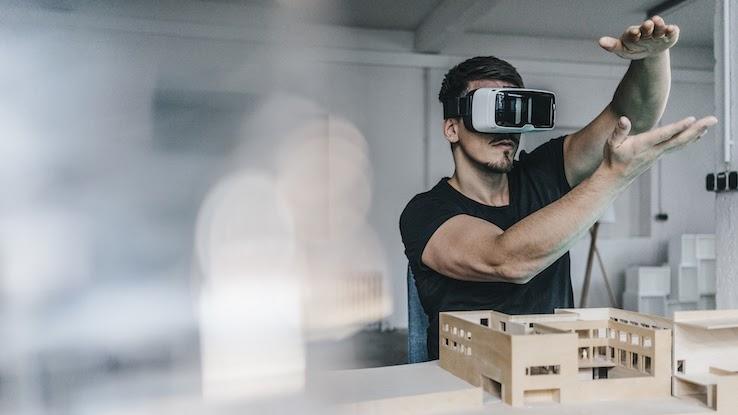
But VR isn't confined to these pop HMDs nosotros're all scooping upwardly. Desktop-based VR provides a virtual, 3D world without whatsoever positional tracking equipment or head-mounted displays, assuasive users to take in a virtual world using loftier-resolution OLED or LCD monitors. Meanwhile, augmented reality (AR) blends users' digital content experience with their real-life surroundings, and mixed reality (MR) uses a combination of real and virtual worlds, allowing digital and physical objects to exist and interact in real-fourth dimension. Conspicuously, the potential for growth in the field of VR is nearly boundless. In fact, the only real limitation might be one's lack of imagination.
greeneeaceforehis.blogspot.com
Source: https://www.ask.com/entertainment/oculus-quest-2-best-vr-platform?utm_content=params%3Ao%3D740004%26ad%3DdirN%26qo%3DserpIndex
0 Response to "Do I Have to Buy Skyrim Again for Vr"
Postar um comentário