How Do I Clear Itunes Songs Offf My Ipod and Make Sure They Never Auto Synch Again
Do you have an onetime iPod that'south sitting effectually gathering dust? It might nonetheless have music on information technology that you no longer possess in whatever other form. If that's the case, take hold of your one-time music player, considering y'all can transfer the music from your iPod to your computer.
To practice so, you just need to consider your iPod every bit an external drive that y'all can have music from. Once extracted from the iPod, you lot can add together music to your iTunes or Apple Music library and even sync it with your iPhone. We'll show you lot how below.
Pace i. Prevent iTunes From Automatically Syncing With Your Device
First, yous'll need to make sure you can transfer the music on your iPod without iTunes or the Music app erasing it while syncing.
When you connect a device to iTunes or the Music app, the music in your library automatically syncs to your device. Y'all cannot download music from an iPod (or iPhone or iPad) into iTunes or Music. Then if you lot connect an iPod to your computer, the music on the device will be overwritten with what's in your iTunes or Music library.
The method for preventing iTunes from automatically syncing with your iOS device is mostly the same for Windows and Macs running Mojave or earlier:
- Make sure to disconnect all iOS devices from your computer. So, open iTunes.
- In Windows, become to Edit > Preferences. On a Mac, become to iTunes > Preferences.
- On both platforms, click the Devices tab and cheque the Prevent iPods, iPhones, and iPads from syncing automatically box.
- And so click OK and close iTunes.
However, Macs running macOS Catalina and newer use Finder instead of iTunes to sync iOS devices. Because of this, you'll need to open your device in Finder and uncheck the Automatically sync when this iPhone is connected box.
Footstep ii. Copy Music From Your iPod to Your Calculator
Now, you can connect your iPod to your reckoner. It should evidence upwardly equally a drive both in File Explorer on Windows and Finder on a Mac. Open up the iPod drive and navigate to the iPod_Control > Music folder. You'll see many folders labeled with an F and a number.
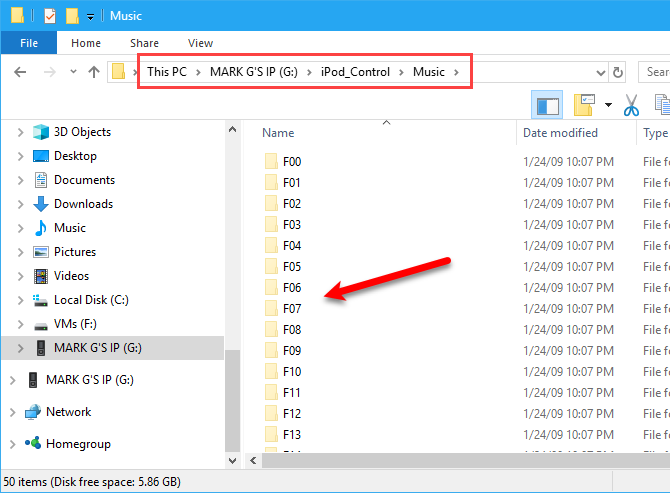
If your iPod drive appears empty, yous need to reveal hidden files and folders on your computer.
Windows 7, viii, and x users can first use Alt + 5 to bring up the View tab. Afterward, press the H fundamental 2 times to reveal hidden items. You tin then either uncheck the Hidden items box or repeat the procedure to hide your files.
For those using macOS, concur down Cmd + Shift + Menstruum to toggle hidden folders on or off. Select all the folders in the iPod_Control > Music folder and copy and paste them to a location on your hard drive. This will transfer your music from your iPod to your reckoner. The files all have random iv-letter file names.
If you're using a Windows PC, you can come across the tags for each music file in File Explorer. You won't meet the tags in Finder on a Mac. Later, we'll show y'all how to easily change the file names using the tags.
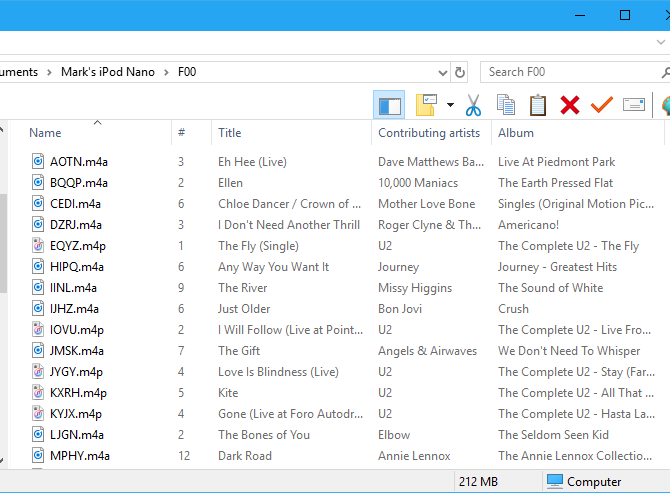
Once you've copied the files, you can eject the iPod and disconnect it. On a Windows PC, right-click on the iPod drive in File Explorer and select Eject. Mac users should Control-click on the iPod icon on the desktop and select Eject.
If y'all don't want to utilise iTunes or Apple Music, you tin can also endeavour these tools to manage your MP3 collection.
Step 3. Add the Music to Your iTunes Library
After transferring the music from your iPod to your computer, y'all tin beginning making adjustments. Start, add the music from your iPod to your iTunes library on your Windows PC or Mac. Annotation that on macOS Catalina and newer, your music library appears in the Apple Music app since iTunes is gone.
By default, on Windows, calculation items to your iTunes library creates a reference to the file's current location. The original file remains in the current location. Thus, if you were to motion the original files, iTunes would no longer encounter them.
Y'all can have iTunes for Windows brand a copy of each file and place them into the iTunes media folder. Moving the original files would and then not affect the music in your iTunes library.
How to Centralize Your iTunes Music on Your Figurer
Open iTunes for Windows and get to Edit > Preferences. Click the Advanced tab and check the Copy files to iTunes Media folder when calculation to library box. This selection is checked by default in iTunes for Mac (on Mojave and earlier). In one case enabled, all media added to your iTunes library from then on will copy directly to the iTunes media folder.
Now y'all won't accept to worry well-nigh moving the original files anywhere else. Just remember, media added to your iTunes library before enabling that checkbox withal links to the original media files.
How to Organize and Expand Your iTunes Library
To organize your iTunes Media folder into artist and album folders, check the Keep iTunes Media binder organized box. Again, iTunes or the Music app for Mac enables this option past default.
If you accept infinite, information technology's a good thought to copy all your media files to the iTunes Media folder. That way, they're all in one location and easy to back up.
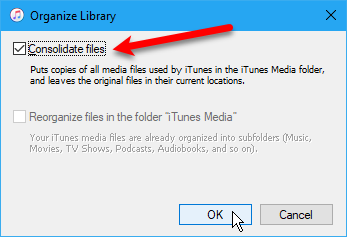
To copy the remaining media files linked to in your iTunes library, go to File > Library > Organize Library. On the Organize Library dialog box, cheque the Consolidate files box and click OK.
To add some or all of the music from your iPod to your iTunes library, get to either File > Add File to Library or File > Add Folder to Library in iTunes for Windows. If yous're using a Mac, go to File > Add to Library. So select the files or folder yous want to add together. You can likewise add music to iTunes by dragging music files from File Explorer or Finder to the iTunes window.
If yous need to modify or fix tags on your recently added music, you can do then directly in iTunes or the Music app. Yous can change or prepare tags for either a unmarried song or multiple songs equally needed.
Editing a Single Tag
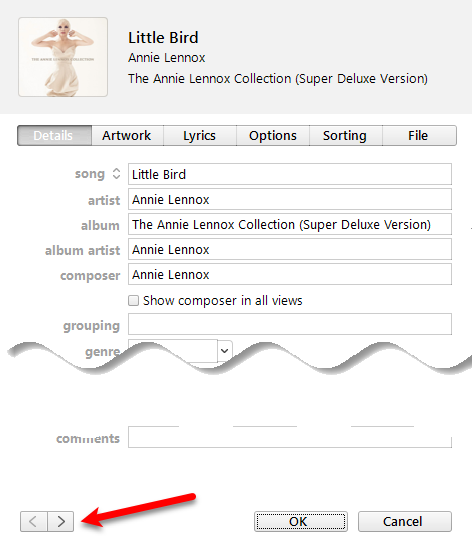
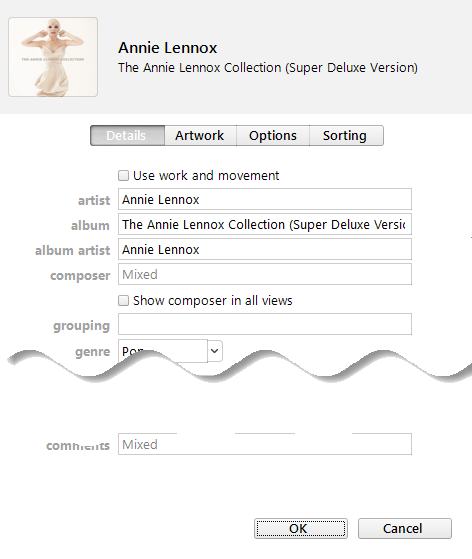
To edit tags on Windows, correct-click on the vocal and select Song Info. If using a Mac, hold Control and click to select Album Info.
In the dialog box that displays, you'll run across several tabs containing information about the selected song. You can edit items like the song title, artist, album, and genre. Click the buttons at the top to view and change the different information. To become to the adjacent song in the list, click the arrows at the bottom of the dialog box. When washed editing the tags, click OK.
Editing Multiple Tags
You can also edit common information for multiple songs at the same time. Use the Shift or Ctrl (Cmd on Mac) keys to select the songs you want to edit. Then correct-click on the selected songs and select Go Info.
A confirmation dialog box displays. If you don't desire to see this dialog box every time, check the Do not ask me over again box.
Click Edit Items to continue. But the tags that apply to all the selected items brandish in the window. Click the buttons at the acme to access the different types of information. Edit tags equally you want and click OK.
Pace 5. Create a Playlist in iTunes
If you use playlists on your iPhone, you tin create them in iTunes, and they'll sync to your iPhone. Whether using Mac or Windows, the process is the same. To create a playlist, select the songs you want in the playlist. And so right-click on the selected songs and select Add to Playlist > New Playlist.
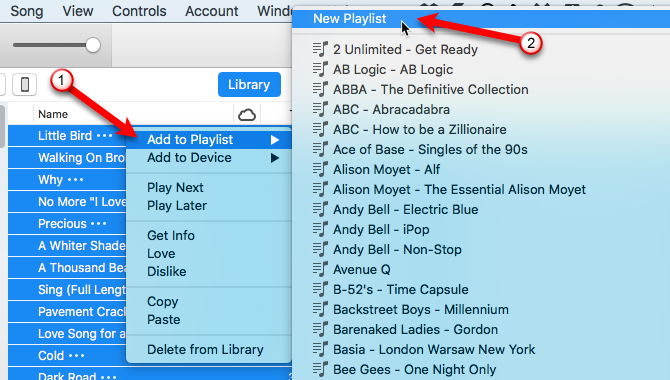
For similar songs (such equally an album), the playlist is created using artist and album title as the name. If you create a playlist from various songs, you'll need to enter a custom name. To alter the proper noun of the playlist, click on the title and type a new title. You can also rearrange the songs in the playlist by dragging and dropping them to different positions.
Step 6. Transfer Music to Your iPhone
To transfer the added music to your iPhone, make sure iTunes or Finder is open and connect your device to your figurer. Then click the device icon at the superlative of the iTunes window (or select the device in Finder on macOS Catalina and newer).
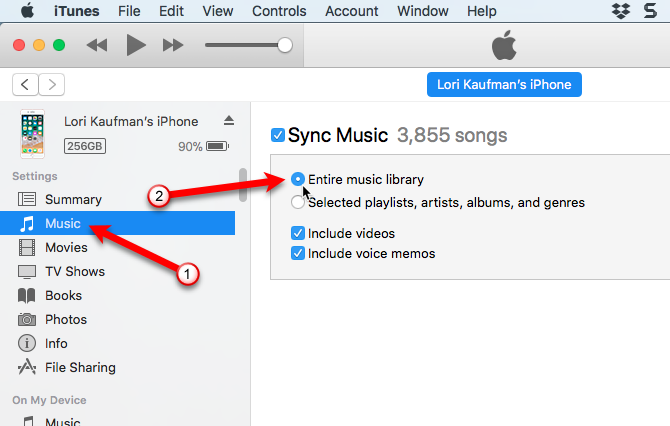
If you lot want to chop-chop sync content to your iPhone, you can use iTunes to sync your entire music library. Alternatively, if you only want to sync selected items, just the called playlists, artists, albums, and genres will sync.
In example you see a Replace and Sync message, remember that the iTunes library replaces everything on your iPhone.
To sync your unabridged library, click Music in the sidebar on the left under Settings. So make sure to select Sync Music on the right and select Entire music library. Now press the Utilise push button in the lower right. If syncing doesn't begin, you can press the Sync button.
Meanwhile, if you don't like iTunes, cheque out the best music manager apps for iOS.
Pace 7. Rename the Music Files
One time you've transferred your sometime iPod music, you lot tin rename the copied files. The random iv-alphabetic character file names assigned to the files copied from your iPod aren't descriptive at all. On a Mac, you won't know what the songs are without calculation them to iTunes or utilizing another app.
You lot can manually rename the files, merely in that location'south an easier way using a free tool called Mp3tag. It'due south a Windows program, but Mac users tin can use it via a workaround.
Rename Your Files With Mp3tag on Windows
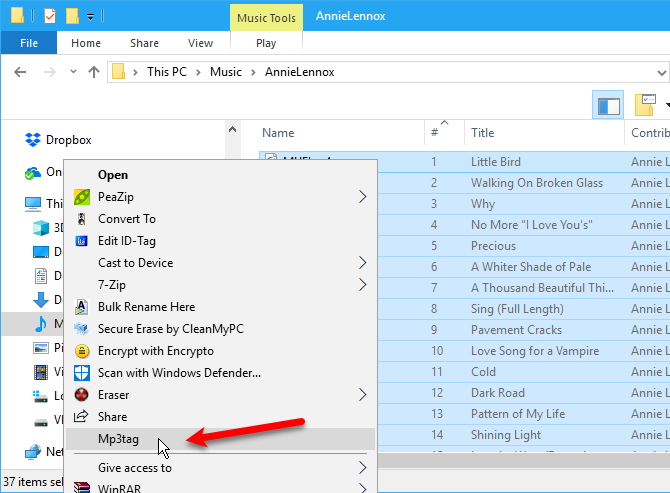
On Windows, download Mp3tag and install it. To add together Mp3tag to the File Explorer bill of fare, check the Explorer Context Bill of fare box on Choose Components screen during installation. To rename music files from your iPod, select the files in File Explorer. Then right-click on the files and select Mp3tag.
Inside the programme, highlight your songs. Become to Convert > Tag - Filename or printing Alt + 1. In the Tag - Filename dialog box, enter a Format cord using placeholders to gear up up your filename scheme. For example, look at the Format string in the prototype below. It creates a file name with a ii-digit track number, song title, artist name, and album name.
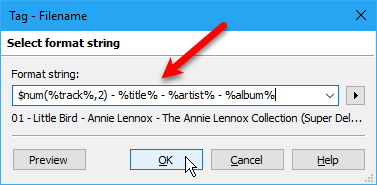
If you want to construct your ain file name, you lot tin use different format string placeholders available. Go to Help > Contents to go more info about them. After the transmission opens in your browser, click Renaming files based on tags under Working with tags and file names. You'll notice a list of placeholders you can use in the Format cord. Utilise these to create custom file names for your music files.
Alternatives and How to Use Mp3tag on Mac
There are music tagging apps for Mac like Kid3, but they aren't as piece of cake to employ as Mp3tag. If you have macOS 10.14.6 Mojave or later, the developer of Mp3tag has a total version. However, Mac users either have to opt for a short-term trial or pay for the total app.
You can download Mp3tag for Mac from the programmer website. If you lot choose to buy the full version, it'll price you $19.99.
Later it's finished downloading, add together it directly to the Applications folder on your Mac and run the prepackaged application. Utilise the aforementioned steps listed above to rename music files using Mp3tag on your Mac.
If this all seems too much, attempt these alternatives to the Mac Music app and iTunes.
Animate New Life: Transfer Music from an Old iPod to Your Computer
If your old iPod still charges plenty to utilize, you lot can easily transfer music from that iPod to your computer. After transferring music from your iPod to iTunes or your iPhone, give it a new purpose. Consider reusing your erstwhile iPod equally an eBook reader or a secondary music collection holder.
About The Author

greeneeaceforehis.blogspot.com
Source: https://www.makeuseof.com/tag/transfer-music-ipod-computer/
0 Response to "How Do I Clear Itunes Songs Offf My Ipod and Make Sure They Never Auto Synch Again"
Postar um comentário